


Attending college is a significant milestone, and receiving your diploma is a testament to your dedication and hard work. Follow along as we discuss how to get a copy of your college diploma. This guide is for graduates who have lost their college diploma and need an official or unofficial copy for employment, further education, or personal records. Whether you need a replacement for job applications, graduate school, or simply to keep your records complete, understanding the process is essential. We’ll cover both official and unofficial diploma copies, outline the steps to request a replacement, and explain why having your diploma on hand matters for your future opportunities.
What Is a College Diploma?
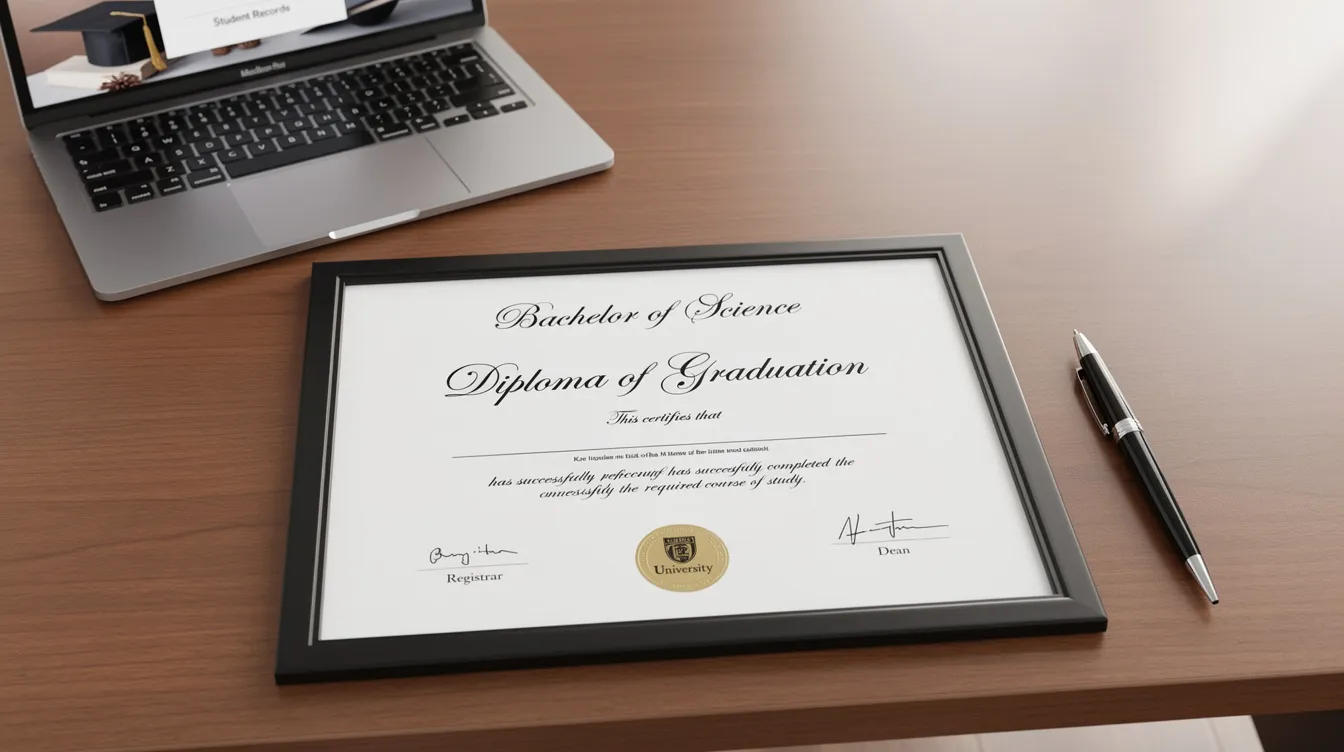
A college diploma is an official notice of meeting the graduation requirements of a school’s program, and it also represents the effort put forth by the student. Learners are the recipients of diplomas, earning them through successful completion of their academic journey. Alongside diplomas and degrees, certificates are another form of academic recognition that students may earn for completing specific programs or achievements.
College diplomas come in many forms, colors, sizes, and fonts. Each institution’s diploma is distinctive.
A college diploma gets awarded to learners who have graduated from Associate’s, Bachelor’s, Master’s, and Doctorate programs. The registrar's office, which manages student records, class schedules, and registration for classes, is typically responsible for issuing diplomas.
An associate’s degree lasts two years but might take longer depending on whether a student is part-time or full-time. The associate’s program equates to the freshman and sophomore year of a Bachelor’s program.
Many students who begin college at a two-year community college transfer to a four-year college or university after graduating with an Associate’s diploma.
A Bachelor’s program typically lasts four years, but it could end sooner or later, depending on the number of credits a student completes each semester. A Bachelor’s program usually focuses on one or two (dual degree) areas of interest.
A Master’s program specializes in an area and requires significant writing, such as research or a thesis. It can last one to three years.
A Doctorate program is the highest level of post-secondary education. It also asks students to conduct a research project involving extensive writing and lasts four to ten years. Completion of a doctorate program might lead to teaching at a college or university.
A diploma represents not only the completion of a degree but also key academic history, which is generally required for diploma replacement. This includes your graduation year, degree type, and major.
Now that you know what a college diploma is, let’s look at the different types of diplomas you might encounter.
Types of Diplomas
There are several types of diplomas that mark important milestones in a person’s educational journey. The most common is the high school diploma, awarded to students who have successfully completed their secondary education. Earning a high school diploma is often the first step toward higher education, as it is typically required for admission to colleges and universities.
A college diploma, on the other hand, is granted by a higher education institution to students who have completed a degree program, such as an associate’s, bachelor’s, master’s, or doctorate. Each college diploma signifies the completion of a specific level of study and is recognized by academic institutions and employers as proof of a student’s accomplishments.
If you have a lost diploma, or if your diploma is damaged or no longer exists due to unforeseen circumstances, a replacement diploma can be requested from the registrar’s office of the school or college that issued the original document to replace your lost diploma. Understanding why you might need a hard copy of your diploma or transcript can help you appreciate the importance of keeping these documents safe, since a replacement diploma serves as an official duplicate and can be used to verify your educational credentials with employers or other academic institutions.
It’s important to note that while a replacement diploma is a legitimate way to restore lost credentials, a fake diploma is not. Using a fake diploma to misrepresent your education can have serious consequences, including loss of job opportunities and damage to your reputation. Always rely on official channels for diploma replacement to ensure your credentials are recognized and respected.

Now that you understand the types of diplomas, let’s explore why you might need a copy of your diploma.
Why Do You Need a Copy of Your Diploma?
After graduating, most people begin looking for employment even if they plan to attend Graduate school. When applying to Graduate school, job hunting, and interviewing, many colleges and companies request you show your diploma and an official transcript. Under the Family Educational Rights and Privacy Act (FERPA), only the person who earned the diploma—the only person authorized—can request or present it, unless a designated legal representative such as the next of kin of a deceased student is involved. This ensures privacy and compliance with legal regulations.
Both the diploma and official transcript help in the verification process. Accurate data is crucial for employers and admissions representatives to confirm your credentials, as it’s easy to lie about graduating. When requesting a replacement diploma, personal data typically required includes your full legal name, date of birth, and Social Security number. Expect potential employers or admissions representatives to ask for your credentials and run background checks.
Now that you know why a diploma copy is important, let’s see how it can impact your career opportunities.
Career Opportunities
Having a high school diploma or college diploma is often the key to unlocking a wide range of career opportunities. Many employers require applicants to present proof of education, and academic institutions typically expect students to have a high school diploma or equivalent before enrolling in degree programs. Whether you’re entering the workforce or pursuing higher education, your diploma is a vital credential that demonstrates your commitment and achievement.
If your original diploma has been lost or damaged, you can obtain a replacement diploma by following your institution’s official procedures. Most higher education institutions and schools have a registrar’s office or records department that handles diploma replacement requests. You’ll usually need to fill out a signed and dated request form—required by most universities as a fraud prevention measure—provide identification, and pay a fee. The fee for obtaining a replacement diploma can range from $25 to $150, depending on the institution and the type of degree being replaced. The process of receiving a replacement diploma can take anywhere from four to six weeks, although some institutions may take up to ten weeks to issue the new diploma, which is similar to the steps to take if you’re dealing with a lost college diploma outlined by many schools. When your diploma arrives in the mail, it’s important to safeguard it immediately, as diplomas can be lost or damaged during mailing or storage, necessitating another replacement.
In addition to diplomas, transcript services play a crucial role in verifying your academic records. Official transcripts, which detail your completed courses and grades, can be requested directly from your school or through third-party services like Parchment. If you’ve misplaced your original, it’s also helpful to understand what next steps you can take after losing your university diploma, including how transcripts and digital credentials can support verification. With advances in technology, more institutions now offer electronic transcripts and diplomas, making it easier and faster for students and employers to access and verify educational records.
The process of obtaining a replacement diploma or transcript has become more convenient thanks to online resources and support services. Platforms like ValidGrad and Parchment allow you to securely request and receive your documents, helping you move forward with your education or career plans without unnecessary delays. You can also explore options for getting a replacement diploma through services that specialize in fast, high-quality replica documents. These services provide a smarter way for more students and graduates to manage their credentials, no matter where life takes them.
Ultimately, having a legitimate diploma—whether it’s your original or a replacement—is essential for pursuing new opportunities and achieving your goals. By understanding the process and leveraging available resources, you can confidently present your credentials to employers, academic institutions, and other organizations, paving the way for a successful future.
Ready to get your replacement diploma? Here’s a step-by-step summary and detailed guide to help you through the process.
How Do You Get a Replacement Diploma?
Quick Checklist: Steps to Get a Replacement College Diploma
-
Contact the Registrar’s Office: Reach out to the registrar’s office at your college or university, as they are responsible for maintaining student records and fulfilling requests for diploma copies.
-
Complete Required Forms: Most institutions require a signed and dated request form to process a replacement diploma for fraud prevention.
-
Provide Identification: Be prepared to submit identification and personal data, such as:
-
Full legal name
-
Date of birth
-
Social Security number
-
Graduation year
-
Degree type
-
Major
-
-
Pay the Fee: Fees typically range from $25 to $150, depending on the institution and degree type.
-
Processing Time: Expect processing to take 4–10 weeks, depending on the school.
-
Digital Options: Many schools now offer digital credentials (eDiplomas or certified PDFs) that can be delivered instantly for a lower cost.
-
Name Change Documentation: If your name has changed, provide legal documentation (e.g., marriage certificate or court order).
-
Duplicate Notation: Some universities indicate reissued diplomas with a “Duplicate” or “Copy” notation.
-
If the College Is Closed: Contact the state’s Department of Higher Education or education archives for records.
Step 1: Search for Your Original Diploma
Yes, looking for your original diploma is probably the first thing you did. If you suspect you have a lost diploma, retracing your steps and checking with family or former roommates can sometimes help locate it. But sometimes backtracking can help. If you moved into a new apartment or house, you might have left it behind.
Contact old roommates to see if it got mixed up with their belongings. If you lived at home during your college years, call up mom, dad, or grandma. They may have found it and put it in a safe place for you.
After searching high and low, it might be time to use outside resources to get a copy of your college diploma.
Step 2: Contact Your Alma Mater
The next step to getting a copy of your diploma is to contact the college or university you attended. The registrar’s office is responsible for maintaining student records and fulfilling requests for diploma copies. The registrar’s office can help you replace your lost or damaged diploma by guiding you through the official request process. If you’re close by to the school, a friendly trip to the campus Registrar’s office could be helpful.
Each school’s process of requesting a copy of a diploma or transcript will vary. If your college has closed, records can typically be found through the state’s Department of Higher Education or education archives. If you are requesting a diploma or transcript for a deceased individual, you may need to provide a birth certificate or other proof of relationship or authority. But in most cases, a form is completed. The form might ask for your name, address, telephone number, social security number, and student number.
There might be a fee required for a copy. The cost of a replacement diploma depends on the college, but you might pay $15 to over $100 for it.
Expect to wait an estimated four to eight weeks for your order to arrive.
Once you have it, keep it in a memorable and safe place.
Step 3: Consider Novelty or Replica Diplomas
Sometimes the college or university is unable to provide you with a copy of your diploma. Records get lost, or the school closes are two situations that might make replacing your diploma tougher, which is why many people look at all diploma and transcript options available for personal copies and keepsakes.
But now it’s easier than ever to purchase a fake copy of your diploma.
At Same Day Diplomas, we provide USA college and university diploma replicas as high-quality copies of your college diploma. Our products are crafted to match the design, seals, and color of your university’s diploma, and you can easily create a custom replica to suit your needs.
We can provide a sample of a diploma before you order.
Our online form allows customers to input the school’s name, city, state, graduation date, student’s name, and more. Within minutes, your order is placed, connecting learners and institutions around the world through our global service, and you can browse all diploma and transcript options to choose the format and style that works best for you.
When completing the form, please select if you want a hardcopy, digital copy, or both. Physical copies of novelty diplomas can be shipped within 2-7 business days, depending on the service selected, similar to our USA college & university diploma replicas and custom replacement degrees that are designed for fast, high-quality delivery.
Please note, novelty diploma services are intended for personal display, commemorative keepsakes, and decorative purposes only, and are not for official or academic verification.
Please refer to our delivery options page to review the delivery schedule.

FAQ
Q1: What should I do if I lost my diploma?
If you've lost your diploma, start by contacting the registrar's office at your college or university to request a replacement degree. You'll likely need to provide personal information and pay a fee. If the school has closed, check with the state’s Department of Higher Education for records.
Q2: How long does it take to get a replacement diploma?
The processing time for a replacement diploma typically ranges from four to ten weeks, depending on the institution. Some schools also offer digital diplomas that can be delivered instantly or within a few days.
Q3: Can someone else request my diploma for me?
Under FERPA, only the individual who earned the diploma can request their academic records. Exceptions apply if the requester is the next of kin or legal representative of a deceased student.
Q4: Are there fees for getting a replacement diploma?
Yes, fees usually range from $25 to $150, depending on the institution and the type of diploma being replaced.
Q5: What is a printed diploma versus a digital diploma?
A printed diploma is a physical copy of your degree, often used for display. A digital diploma (eDiploma) is an electronic version, often delivered as a certified PDF, which can be shared or printed as needed.
Q6: What if my name has changed since graduation?
You will need to provide legal documentation, such as a marriage certificate or court order, to have your replacement diploma issued with your current name.
Q7: Can I get a replica or novelty diploma if my school cannot provide a replacement?
Yes, companies like Same Day Diplomas offer high-quality printed diploma replicas designed for personal display and keepsakes. These are not official documents and should not be used for academic or professional verification.
Q8: What is a high school equivalency diploma?
A high school equivalency diploma, such as a GED, certifies that an individual has high school-level academic skills. Replacement diplomas or transcripts for GEDs are available through the issuing agency.
Buy Your Copy
No one should stress over a misplaced diploma when it's simple to get a replacement diploma. If you want a copy of your diploma to frame and display, don't waste another moment. Browse our selection of College and University Diplomas and Transcripts on our website and see what the fuss is about.


