


The question "is a fake diploma illegal" comes up more often than you might expect. Whether you lost your original years ago, need a prop for a film set, or simply want to understand the legal risks, this guide covers exactly what U.S. law says about fake diplomas, replica documents, and diploma mills-and where the line sits between harmless display and criminal fraud.
Key Takeaways
-
In the United States, possessing a fake diploma is not illegal unless it is used to deceive someone. Buying a replica diploma for display is legal, and many jurisdictions differentiate between possession and use of fake diplomas.
-
The legal risk starts with intent and use. A replica on your office wall is generally fine; presenting fake credentials on a job application, licensure form, or college admission can be prosecuted as fraud.
-
Some states have specific statutes. In South Carolina, falsifying diplomas is a misdemeanor crime, carrying up to one year of jail time and fines up to $1,000. Each state in the U.S. has varying laws regarding the use of fake diplomas.
-
Same Day Diplomas produces replica and replacement-style documents strictly for novelty, display, and commemorative purposes-never for official academic verification.
What Counts as a "Fake Diploma" (and What Doesn't)?
A fake diploma is any document designed to look like a high school diploma, college degree, or certificate that was not officially issued by an accredited institution. But not all fake diplomas are created equal, and the differences matter legally.
There are three main categories:
-
Novelty or replica diplomas for display, film/theatre props, or replacing a lost original for framing.
-
Forged documents that falsely claim to be issued by a real school.
-
Documents from unaccredited "diploma mills."
Consider the difference: ordering a replica high school diploma in 2026 to replace a lost 1998 original you keep on your wall is a world apart from forging a 2024 degree from a real state university and handing it to an employer.
Same Day Diplomas provides custom replica and replacement-style documents intended only for novelty, display, and commemorative use-not as official proof of education. Legitimate schools and state agencies remain the only sources of valid, verifiable diplomas and transcripts. Employers usually verify credentials directly with those sources, not by examining a framed paper on your wall.
Are Fake Diplomas Illegal to Own in the U.S.?
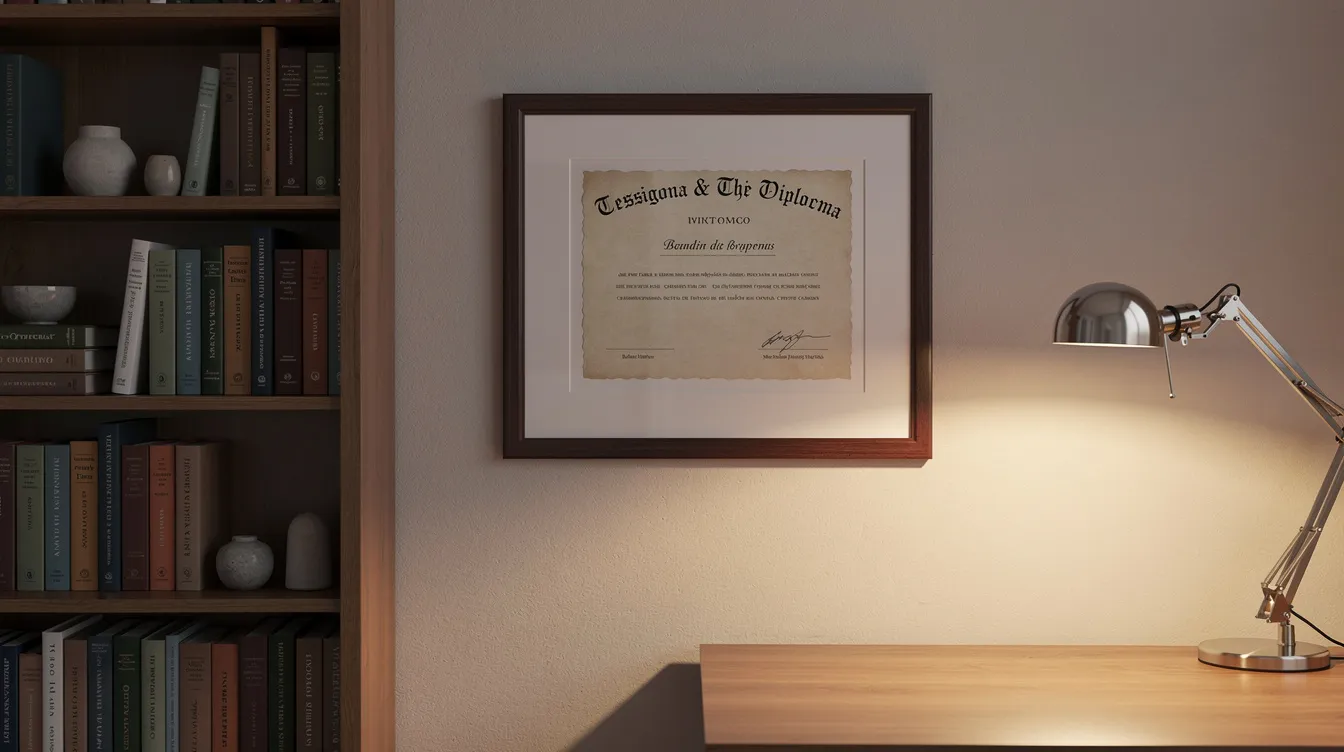
Ownership alone is typically not illegal in the United States. U.S. law generally targets fraud and misrepresentation, not mere possession of a novelty or replica document you keep at home or in an office frame. Non-fraudulent uses of replica diplomas carry no legal risk.
Examples of legal, low-risk ownership include:
-
Framing a replica college diploma in your home office for nostalgic display.
-
Using a fake degree as a movie or theatre prop.
-
Ordering a replacement-looking diploma after your genuine one was lost in a 2010 move, while still using official records when needed.
Even when ownership is legal, the document must never be presented as an official credential to employers, licensing boards, the military, or universities. Note that some countries outside the U.S. have stricter counterfeit-document rules-the maximum penalty for diploma fraud in the UK, for example, can be up to 10 years in prison. International readers should check local law before assuming what's novelty in the U.S. is treated the same elsewhere.
Same Day Diplomas' products are for novelty, personal display, or props only and are not suitable for academic, professional, or governmental verification, even though they are produced by a realistic diplomas and transcript maker with years of experience in replica document design.
When a Fake Diploma Becomes Illegal: Intent and Use
The line between legal and illegal is crossed when there is intent to deceive or gain something of value by misrepresenting your education. Using a fake diploma to deceive others can lead to criminal prosecution, and using a fake diploma to deceive is illegal in many states.
Specifically, using a fake diploma or fake degree to:
-
Secure a new job or promotion can be prosecuted as fraud. Using a fake diploma can lead to job loss even years later.
-
Obtain a professional license in nursing, teaching, engineering, or similar fields triggers regulatory action.
-
Gain admission to a college or graduate program violates admission fraud statutes.
-
Qualify for immigration, military enlistment, or government benefits can fall under criminal fraud or similar statutes. Using fake credentials for government jobs can incur severe charges.
-
Using fake diplomas to obtain financial aid can lead to criminal charges as well.
Prosecutors look at intent: did the person knowingly try to pass the document off as legitimate to gain employment, money, or access? Even using fake diplomas can lead to civil lawsuits for damages, beyond the criminal side.
Here's a brief hypothetical: someone presents a fake high school diploma to a construction firm in 2025 to meet a minimum-education requirement. If discovered, they may be fired and, in some states, charged with fraud. In 2023, a job applicant faced no legal action for a fake diploma that was caught early-but that outcome isn't guaranteed, and jail time for using a fake diploma is rare unless tied to broader fraud.
Same Day Diplomas does not condone or support any use of its products to mislead employers, schools, or government agencies.
State Laws, Fraud, and a Closer Look at South Carolina
U.S. states vary significantly in how explicitly they regulate fake diplomas. Most states do not have a blanket ban on replica diplomas, but they do have laws against fraud, forgery, and falsifying academic records. Some states classify use of fraudulent academic credentials as a crime under dedicated statutes.
South Carolina provides one of the clearest examples:
-
South Carolina law (SC Code § 16-13-15) makes it a misdemeanor to falsify, forge, or alter school transcripts, diplomas, or GEDs with intent to defraud or mislead.
-
Falsifying diplomas can result in fines up to $1,000 and up to one year in jail.
Concrete examples of illegal acts under such a statute include:
-
Submitting a forged GED to a community college in Columbia, South Carolina in 2026.
-
Altering grades on a transcript to get into a nursing program.
-
Using a fake high school diploma to meet a minimum requirement for a new job with a state agency.
Other states use similar approaches. In Oregon, using a diploma mill degree is civil fraud and a misdemeanor. Iowa's statute (§ 715A.6A) prohibits making, selling, or using false academic credentials for employment or admission. Many other states prosecute under general forgery or consumer protection laws even without mentioning "fake diplomas" by name.
Anyone already facing an accusation should consult a licensed attorney in their state. This article is informational, not legal advice.
Diploma Mills, "Life Experience" Degrees, and Accreditation
A degree mill or diploma mill is an unaccredited business that sells diplomas and fake degrees with little or no academic work required. The term "diploma mill" was defined by federal law in 2008 under 20 U.S.C. § 1003(5), describing entities that offer degrees for a fee while lacking recognized accreditation.
Diploma mills often advertise:
-
"Instant" high school diplomas completed in a day.
-
College degrees based entirely on "life experience."
-
Vague or fake accreditation from made-up agencies.
The scale is significant. Diploma mills can generate millions in revenue annually-in 2014, a diploma mill made over $11 million selling fake diplomas. Over 50% of questionable credentials come from U.S. diploma mills, and historically documented operations like the infamous "Saint Regis University" sold tens of thousands of bogus credentials worldwide before being shut down.
As of mid-2026, there is no single federal government law banning diploma mills nationwide. Only twelve U.S. states have laws against diploma mills. Twelve states have laws against using credentials from diploma mills, but enforcement remains inconsistent.
For readers, the key point is:
-
A diploma from a diploma mill usually carries no academic or professional weight.
-
Using one to gain employment, a license, or admission can still be prosecuted as fraud, even if buying it wasn't explicitly illegal, and anyone considering this should first understand the legal risks of using fake diplomas or transcripts.
Contrast this with legitimate education options: accredited online programs, state-approved high school equivalency tests, and recognized community college programs all provide verifiable credentials that hold up to scrutiny.
Real-World Consequences: Jobs, Licenses, and Background Checks
Even when criminal charges are rare, employers and licensing boards increasingly detect fake diplomas through routine checks. About 80% of U.S. companies check educational credentials before or after hiring, and technology continues to make degree verification service processes faster and more thorough.
How employers verify education:
-
Contacting the school directly or through a registrar's office.
-
Using third-party services such as the National Student Clearinghouse.
-
Cross-checking graduation dates, majors, and campus locations.
Employers frequently verify degrees through official records rather than relying on diplomas. When a fake diploma is discovered, typical outcomes include:
-
Revocation of a job offer. In 2022, a sales rep was fired for a fake degree after a routine background check.
-
Termination of employment even after years on the job. Employers can terminate individuals if a fake diploma is discovered at any point.
-
Reporting to professional licensing boards that may revoke a license. Fake diplomas can result in denial or revocation of professional licenses, especially in healthcare, law, accounting, teaching, and engineering.
The penalties for using fake diplomas are more severe in regulated fields. Credibility damage from using fake diplomas can hinder future job searches, and employers may face challenges hiring someone with a fake diploma on record.
A fake high school diploma or fake degree can also affect:
-
Eligibility for military enlistment.
-
Acceptance into apprenticeship or trade programs.
-
Security service clearance decisions.
Presenting any novelty, replica, or non-accredited credential as equivalent to a diploma from accredited institutions on a resume or official form is risky and should be avoided.
Replica and Replacement Diplomas for Legal, Non-Fraudulent Uses
Many people simply want a nicer or replacement copy of a diploma they legitimately earned, or a realistic prop, without any intent to deceive. Using replica diplomas to replace lost credentials is legal, and these uses are entirely separate from fraud.
Common legitimate uses include the benefits of a college diploma replica, such as safe display and temporary replacements:
-
Replacing a lost, damaged, or stolen original for home or office display.
-
Creating a matching set of degrees for a gallery wall.
-
Using a fake diploma as a theatre, TV, or film prop.
-
Giving novelty certificates as gag gifts or commemorative keepsakes.
In these scenarios, the key is transparency: the replica is never used as evidence in admission, hiring, or licensing decisions.
A business like Same Day Diplomas fits squarely into this lawful space, offering a wide range of diploma and transcript options:
-
It produces custom replica high school diplomas, college degrees, and transcripts for novelty and display use, including highly detailed USA college and university diploma replicas for personal, commemorative purposes.
-
It offers accurate layouts, fonts, and seals for realistic presentation and quality.
-
It explicitly warns customers that documents are not official academic records and must not be used for verification.
Best practices for responsible replica use:
-
Always retain contact info for your real school registrar for official verification.
-
Use only official transcripts or school-issued duplicates in any formal process.
Responsible replica use lets people celebrate achievements visually without crossing legal or ethical lines.
Smarter Alternatives to Fake Credentials
If you're considering a fake diploma for career reasons, step back and look at legitimate options that actually protect your future.
Ways to earn real credentials:
-
High school equivalency tests (GED, HiSET, or state-specific exams) prepare you for a recognized certification. Learn more about how to get your high school diploma through official channels.
-
Accredited adult high school completion programs, often available through community college systems.
-
Online degree programs from regionally or nationally accredited institutions that meet a certain level of academic rigor.
Regarding life experience in a legitimate context:
-
Some accredited programs may grant limited prior learning credit after formal evaluation through portfolios and exams.
-
No recognized U.S. program grants an entire high school diploma or college degree purely from life experience with no coursework or testing.
Practical benefits of going legit:
-
Real, verifiable educational credentials withstand every background check.
-
Better long-term career stability and earning power.
-
Reduced risk of embarrassment or legal action later.
If you already have a real diploma but lost the paper document, request an official replacement from your school, and optionally use a high-quality USA college and university diploma replica for display while preserving the official copy for safekeeping. Same Day Diplomas is best suited for those who already completed the work and simply need a display-ready certificate-not an academic shortcut.

How Same Day Diplomas Approaches Legal and Ethical Use
Same Day Diplomas operates strictly in the novelty and commemorative space and is committed to responsible use of its products. The company has always been transparent about what it does and doesn't make.
The company:
-
Designs replica and replacement-style diplomas, degrees, transcripts, and certificates based on realistic layouts.
-
Offers fast, often same-day production and worldwide shipping.
-
Provides free digital proofs so clients can confirm details before printing.
Key ethical safeguards include:
-
Clear disclaimers that products are not official documents and are for display, props, or keepsakes only.
-
No claim that documents will pass employer, university, or government verification checks.
-
Encouragement for customers to use proper official channels when they need recognized academic records.
Common customers include:
-
A 45-year-old professional replacing a water-damaged 2002 university diploma for their office wall.
-
A production company needing a stack of believable high school diplomas for a TV graduation scene.
-
A parent creating a fun "graduation day" certificate for a homeschool milestone alongside the official paperwork.
Attempting to misrepresent any Same Day Diplomas product as an officially issued, accredited credential is against the company's terms of use and can expose the user to legal risk.
Practical Tips: Staying on the Right Side of the Law
Here's a concise checklist to keep your use of replica or novelty diplomas safe and legal.
Do:
-
Do use replica diplomas only for personal display, décor, collections, or entertainment.
-
Do keep track of your real schools and how to order official transcripts or replacement originals.
-
Do read and follow any disclaimers or terms of use from replica providers.
Don't:
-
Don't attach a replica or fake degree to job, licensure, immigration, or college applications.
-
Don't claim that a diploma mill or unaccredited school is equivalent to an accredited program.
-
Don't alter dates, names, or grades on genuine documents; that can convert a lawful record into an illegal forgery.
If you're unsure whether a planned use is legal-for example, adding a novelty diploma to a public-facing website or profile-err on the side of caution or seek legal advice from a qualified attorney.
The safest rule is simple: if a document could change someone's decision about hiring, admission, or licensing, use only official, verifiable records.
Conclusion: Is a Fake Diploma Worth the Risk?
A fake diploma is usually not illegal to own, but it can become illegal-and very costly-when it's used to misrepresent your education.
The core takeaways:
-
Intent and use are what the law cares about.
-
States like South Carolina explicitly penalize falsified school documents.
-
Employers and students of the interview process are better than ever at spotting fake diplomas and diploma mills, with most companies running verification as standard practice.
For people who already did the work, high-quality replicas for display from companies like Same Day Diplomas can be a safe, satisfying option when used honestly and transparently. For those who lack a real high school diploma or degree, investing time and money in accredited programs or state-approved equivalency paths will always pay off more than shortcuts that might backfire.
Legitimate education and honest presentation of credentials remain the most reliable route to long-term career and personal success. The demand for skilled, credentialed professionals isn't going away-and neither is the technology to verify who actually earned their degree.
FAQs About Fake Diplomas and Legal Use
Below are answers to common questions that go beyond what we covered above.
Can I bring a replica or fake diploma when I move abroad or apply for a visa?
Immigration and visa authorities almost always require official transcripts and diplomas sent directly from schools or credential evaluation services-not personal paper copies, whether replica or real. Carrying a replica in your luggage for décor is generally harmless, but presenting it as official in an immigration interview could be treated as fraudulent in many countries. For any consulate or immigration process, rely on certified copies, sealed transcripts, or credential evaluations from recognized agencies.
Is it illegal for a company to sell fake diplomas online?
In the U.S., selling clearly labeled novelty or replica diplomas for display, props, or commemorative use is generally legal, as long as the seller does not market them as official credentials. Online "schools" or vendors that claim their diplomas are fully accredited degrees-or encourage buyers to use them to gain employment or licenses-may violate consumer protection, fraud, or education laws. Look for transparent novelty disclaimers, clear terms of use, and no promises that the document will pass verification checks.
What should I do if an employer discovers I used a fake diploma?
Once a fake credential has been used in hiring, the employer is likely within their rights to rescind an offer or terminate employment, especially if the role required a specific level of education. If there is a risk of criminal prosecution, speak with an employment attorney and be truthful in any internal investigation rather than compounding the issue. Use the situation as a turning point to pursue legitimate education or training.
Can I list a novelty or replica diploma on my resume?
Resumes should reflect real, verifiable education only. A novelty document is not an academic credential and has no place in education sections. If the replica simply duplicates a real degree you earned, list the actual institution and program-not the replica provider-and use official records for any verification during the interview process. Putting a novelty or unaccredited "degree" on a resume can be viewed as dishonest by companies, even if it's technically not a forged document.
How can I tell if a school offering fast online diplomas is legitimate?
Verify accreditation by checking the school against databases from the U.S. Department of Education or the Council for Higher Education Accreditation (CHEA), and confirm with your state's department of education. Promises of a high school diploma or degree in just a few days, with no tests or coursework and based entirely on "life experience," are classic red flags of diploma mills. Contact local community colleges or workforce centers for guidance on recognized high school equivalency and adult education options instead of risky quick-fix programs.
Ready to get your custom replica diploma today? Browse our wide selection of high-quality, fully customizable diplomas and certificates designed for display, keepsakes, and props. Order now and enjoy fast, discreet shipping with free proofs before print. Celebrate your achievements the right way with Same Day Diplomas!
