


What Is a Blue-Collar Job? A Quick, Clear Answer
Whats a blue collar job is one of the most common questions people ask when exploring career paths outside the traditional office — and the answer is simpler than you might think.
A blue-collar job is any occupation that involves manual labor, skilled trades, or hands-on physical work. These roles are typically performed in environments like construction sites, factories, warehouses, and industrial plants — not behind a desk.
Here's a quick breakdown:
| Feature | Blue-Collar Jobs |
|---|---|
| Type of work | Physical, hands-on, trade-based |
| Common industries | Construction, manufacturing, logistics, utilities |
| Pay structure | Hourly wages or piecework |
| Education path | Apprenticeships, trade schools, certifications |
| Examples | Electrician, plumber, welder, HVAC technician |
Blue-collar workers are the people who build, maintain, and power the physical world — from the pipes in your walls to the roads under your tires.
These aren't low-skill jobs. Many require years of specialized training, and some — like nuclear technicians or underwater welders — pay well over $100,000 a year.
I'm Taylor Pace, founder of Same Day Diplomas, and after 22 years helping tradespeople and career builders replace lost credentials, I know how critical proper documentation is when someone asks whats a blue collar job worth pursuing. Whether you're entering the trades or moving up the ladder, let's break down everything you need to know.
Defining the Modern Workforce: Whats a Blue Collar Job?
When we look at the world around us in 2026, it is easy to get distracted by the digital veneer of apps and AI. However, the physical infrastructure that supports that digital world is maintained by the hands of millions of workers. To truly understand What Is a Blue-Collar Worker?, we have to look past the stereotypes of the past.
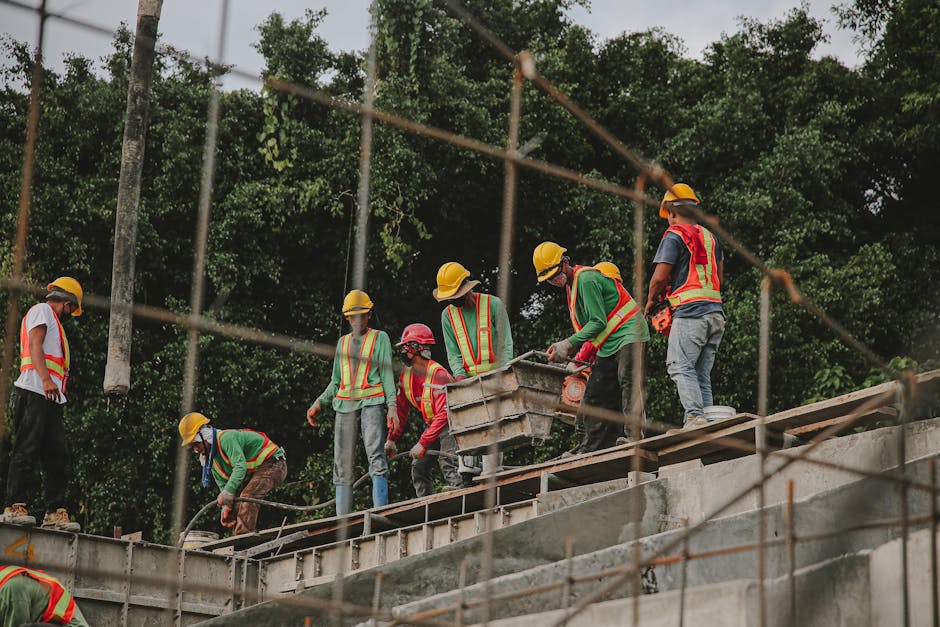
A blue-collar job isn't just "hard work"; it is the application of specialized, physical skill to solve real-world problems. Whether it is a crew framing a new sustainable housing development or a technician troubleshooting a complex HVAC system in a commercial skyscraper, these roles are the bedrock of our economy. According to the Indeed.com guide on blue-collar careers, these workers are identified by their hands-on involvement in production, maintenance, and construction.
Understanding the Core Definition of Whats a Blue Collar Job
At its heart, the distinction of whats a blue collar job often comes down to how you are paid and what you do with your day. Unlike white-collar roles, which are typically salaried and office-bound, blue-collar positions often utilize hourly wages or piecework (being paid per task completed).
This pay structure is actually one of the biggest "secrets" of the industry. Because blue-collar work is often tied to specific shifts or projects, overtime pay can significantly boost an annual take-home salary. We’ve seen heavy equipment operators out-earn their managers simply because they were willing to put in the extra hours during a busy construction season.
Furthermore, the "working class" label is evolving. As we discuss in our look at Is Consumer Services A Good Career Path In 2026, many modern roles blend service with technical trade skills. A blue-collar worker today might be a highly specialized technician who requires years of vocational training and specific certifications to even set foot on a job site.
Common Characteristics and Work Environments
If your "office" has a sky for a ceiling or requires steel-toed boots to enter, you’re likely in a blue-collar environment. These workplaces are characterized by:
- Physical Stamina: You won't be sitting in an ergonomic chair all day. You'll be on your feet, lifting, reaching, and moving.
- Outdoor and Industrial Sites: From the heat of a manufacturing plant to the unpredictable weather of a roadside repair, the environment is rarely climate-controlled.
- Safety First: Because the work involves heavy machinery, electricity, or heights, safety gear (PPE) is non-negotiable.
- Regulatory Compliance: In regions like the USA, UK, and Australia, workers must adhere to strict standards (like OSHA in the US) to ensure everyone goes home at the end of the shift.
Blue-Collar vs. White-Collar: Key Differences and History
The "collar" terminology might seem like a relic of the past, but it still helps us categorize the vast landscape of employment. Historically, the Difference Between Blue-Collar vs White-Collar Jobs was as simple as the clothes on your back.
Historical Context of Whats a Blue Collar Job
The term "blue-collar" was first recorded in 1924 in an Iowa newspaper. It referred to the durable blue denim or chambray shirts worn by manual laborers. Why blue? Because dark blue fabric was excellent at concealing the dirt, grease, and oil stains that were part of a day's work in a factory or mine. This stood in stark contrast to "white-collar" workers, who wore white dress shirts that stayed clean in their administrative office roles.
During the Industrial Revolution and the post-WWII boom, blue-collar roles were the primary drivers of urbanization in cities like Detroit, Pittsburgh, and Manchester. By the mid-20th century, these roles accounted for 55% of the total U.S. workforce. While the 1960s saw a shift toward office work — with white-collar roles rising to nearly 47% of all jobs — the core need for physical builders never went away. In fact, as Investopedia explains in their definition of blue collar, the line is blurring as technology makes blue-collar work more technical and white-collar work more automated.
Education and Training Pathways
One of the most persistent myths about whats a blue collar job is that it doesn't require "real" education. That couldn't be further from the truth. While you might not need a four-year liberal arts degree, you absolutely need specialized knowledge.
We often help people who have misplaced their vocational certificates or trade school diplomas, and we know that these documents represent years of hard work. Pathways include:
- Apprenticeships: About 70% of construction workers learn their trade this way. It’s the ultimate "earn while you learn" model.
- Trade Schools: These offer focused, intensive training in specific fields like welding or HVAC, often taking two years or less.
- Vocational Training: Many high schools and community colleges offer programs that lead directly to certifications.
For a deeper dive into which roles you can start right now, check out our guide on Jobs That Require A High School Diploma.
Essential Industries and Career Paths in the Trades
The variety of careers available in the trades is staggering. If you enjoy solving puzzles, working with your hands, or seeing the tangible results of your labor at the end of the day, there is a path for you. As we see in our research on What Careers Are Gen Z Most Interested In, there is a massive resurgence in these "Toolbelt Generation" roles.
Skilled Trades and Technical Roles
These are the "classic" blue-collar jobs that keep society running. They require high levels of precision and often involve licensing.
- Electricians: With a median pay often exceeding $67,000, electricians are essential for everything from residential wiring to massive industrial power grids.
- Plumbers: In 2023, median pay for plumbers hit $60,090. It’s a career that is virtually recession-proof — pipes will always leak, and people will always need water.
- Welders: From shipbuilding to aerospace, welders are the "glue" of the industrial world. Specialized welders, like those in the nuclear industry, can earn six figures.
- HVAC Technicians: As climate control becomes more complex and energy-focused, these techs are in higher demand than ever.
Many of these are Jobs That Only Require A High School Diploma plus a few years of focused training or an apprenticeship.
Specialized Infrastructure and Service Jobs
Beyond the building site, blue-collar work powers our global logistics and energy sectors.
- Truck Drivers: The lifeblood of global trade. Whether it's long-haul trucking in the USA or local logistics in the Philippines, these drivers keep the shelves stocked.
- Heavy Equipment Operators: These are the folks moving the earth. Mastery of cranes, bulldozers, and excavators requires a unique blend of "touch" and technical knowledge.
- Nuclear Technicians: One of the highest-paying blue-collar roles, with average annual salaries often topping $120,000.
- Avionics Technicians: Maintaining the complex electronic systems in aircraft, ensuring safety for millions of travelers.
In regions like the Philippines, blue-collar opportunities are expanding into specialized manufacturing and export logistics, providing stable, high-growth career paths for millions.
The Future of Trades: Technology and Sustainability
The image of a blue-collar worker with just a hammer and a wrench is outdated. In 2026, the modern tradesperson is just as likely to be carrying a tablet or a drone controller.
Technology Integration in Manual Labor
Technology isn't replacing blue-collar workers; it’s giving them superpowers.
- Drones: Used by roofers and solar installers to inspect sites safely and accurately.
- 3D Printing: Construction companies are now "printing" concrete walls for houses, requiring operators who understand both software and material science.
- GPS-Guided Systems: Heavy equipment operators now use GPS to move earth with sub-inch precision.
- Robotic Welding: Welders are transitioning into "robotic technicians" who program and oversee automated welding systems.
This shift means that digital literacy is now a core skill for anyone wondering whats a blue collar job going to look like in the next decade.
Sustainability and Green Construction
The "Green-Collar" revolution is here. As the world shifts toward renewable energy, the demand for workers who can install and maintain this tech is skyrocketing.
- Solar Photovoltaic Installers: Projected to grow by 48% by 2033.
- Wind Turbine Service Technicians: Expected to see a massive 60% growth rate.
- Energy Efficiency Experts: Workers who retrofit old buildings with green materials and smart HVAC systems to reduce carbon footprints.
The USGBC estimates that green construction could generate $145 billion in economic activity by 2030. This isn't just good for the planet; it's a goldmine for career growth. You can learn more about these pathways at Apprenticeship.com.
Frequently Asked Questions about Blue-Collar Careers
Do blue-collar jobs require a college degree?
Usually, no. While some specialized roles might benefit from an Associate Degree, the vast majority of blue-collar careers prioritize skills and certifications over a four-year university diploma. This makes them an incredibly attractive option for those who want to avoid the crushing weight of student debt. If you're looking for Jobs You Can Get Without A High School Diploma, the trades offer some of the most viable paths to a middle-class income through on-the-job training.
Are blue-collar wages competitive with office jobs?
Absolutely. In many cases, they are more competitive. Because of the labor shortage in skilled trades, wages have been rising faster than in many white-collar sectors. When you factor in the ability to earn overtime and the lower cost of entry (no $100k degree required), the lifetime earnings of a master plumber or electrician often rival or exceed those of a typical office manager or accountant.
How is Gen Z impacting the blue-collar workforce?
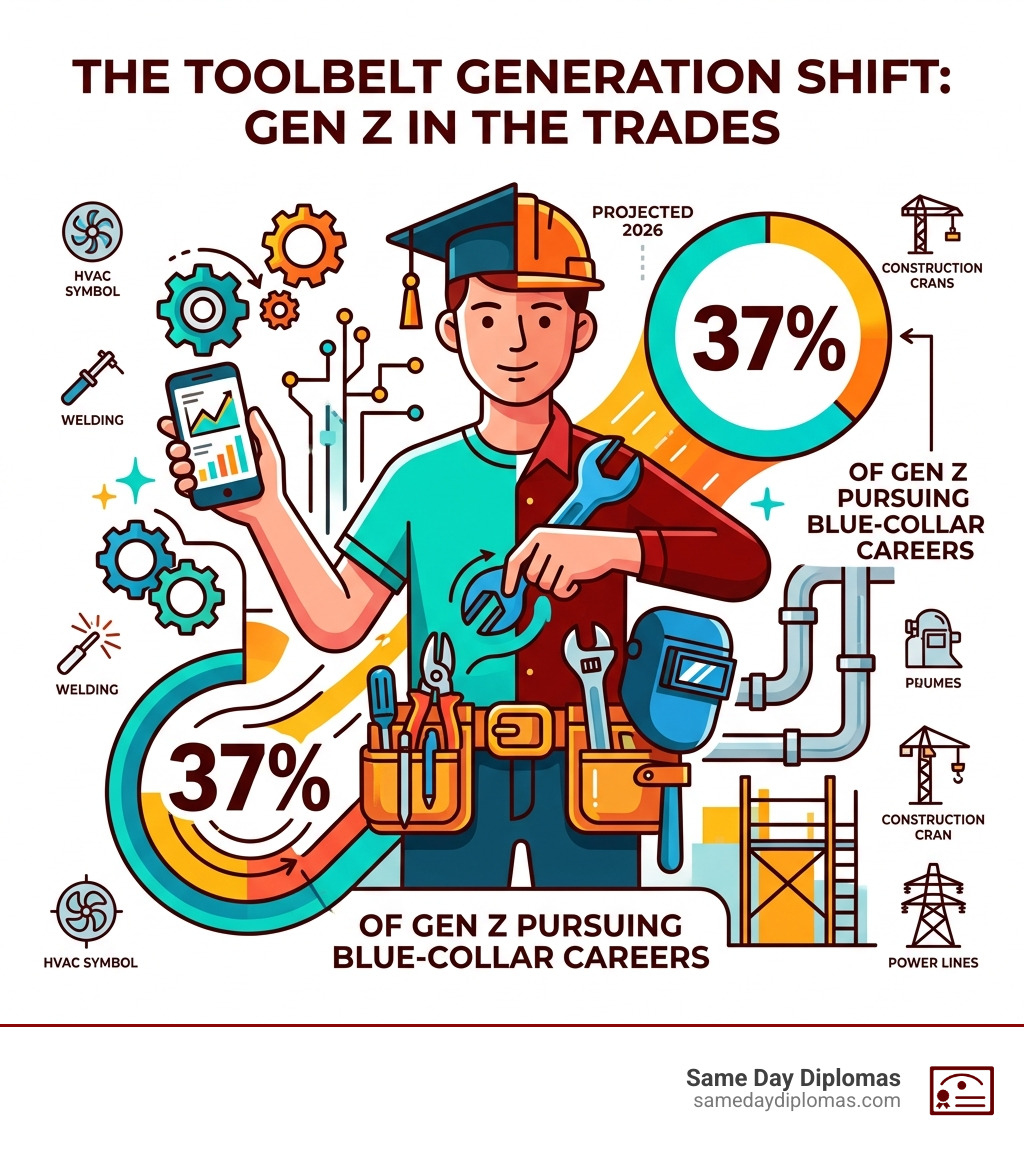
We are currently witnessing the largest shift toward the trades in decades. About 37% of Gen Z are now working in or pursuing blue-collar careers. They are motivated by job security, the desire for "automation-resistant" work, and the satisfaction of seeing a physical result from their labor. They aren't just looking for a paycheck; they're looking for a purpose-driven career that doesn't require sitting in a cubicle for 40 years.
Conclusion
At the end of the day, when you ask whats a blue collar job, you are asking about the heartbeat of our civilization. These roles are irreplaceable. You can't outsource a broken water main to another country, and you can't ask an AI bot to rewire a hospital’s backup generator.
Whether you are a seasoned veteran of the trades or a member of Gen Z looking to pick up a toolbelt for the first time, your skills are the currency of the future. At Same Day Diplomas, we’ve spent over two decades supporting this workforce by providing high-quality replacement documents that help professionals prove their credentials and land the jobs they deserve.
The world will always need builders, fixers, and creators. If you're ready to take the next step in your career, explore our latest career guides and document services to ensure you have everything you need to succeed in the dynamic, rewarding world of blue-collar work.


