


Understanding the difference between official and unofficial transcripts is important for students, employers, and institutions alike. Transcripts are commonly used for academic transfers, job applications, and personal record-keeping, and knowing which type is appropriate can help avoid delays or confusion.
The main difference between official and unofficial transcripts is that official transcripts are validated by the issuing institution, often sealed or sent directly, making them trustworthy for formal purposes, while unofficial transcripts are typically for personal use and lack institutional validation. The primary difference between an official and unofficial transcript is authentication and delivery method.
This comprehensive guide explains the key differences between official and unofficial transcripts, when each is required, and how to obtain them for your specific needs. This article is intended for students, job seekers, and anyone needing to understand transcript requirements for academic or professional purposes.
On This Page
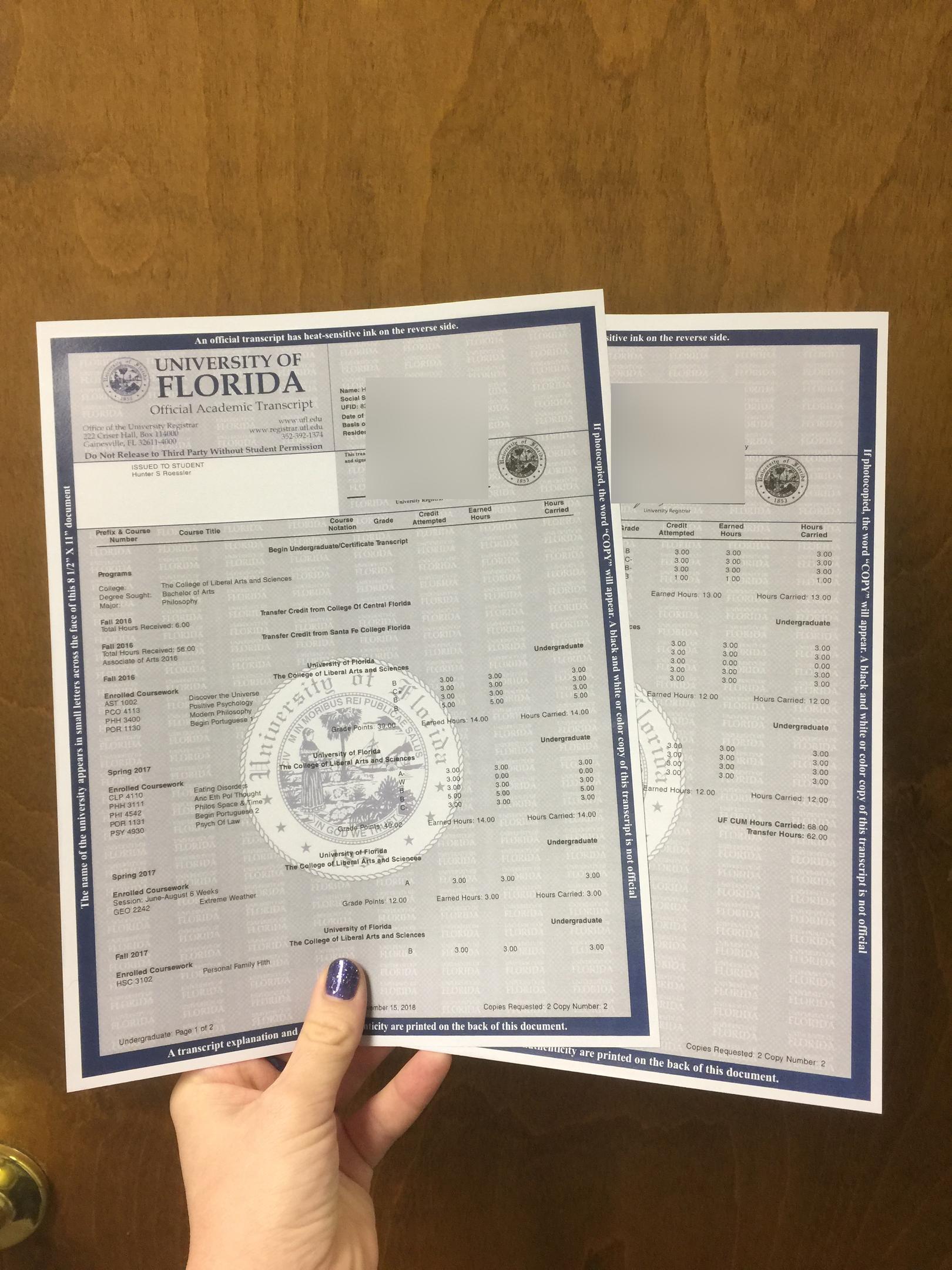
An academic transcript is a comprehensive document listing your courses, grades, credits earned, and degrees conferred, serving as the official record of your educational progress.
Understanding Academic Transcripts: The Basics
An academic transcript is a detailed record of your educational history at a particular institution. It includes courses taken, grades received, credits earned, degrees conferred, and your cumulative grade point average (GPA). Transcripts serve as the official documentation of your academic achievements and are often required for various professional and educational purposes, and they differ in important ways from diplomas, which are ceremonial proof of graduation.
Both official and unofficial transcripts contain the same academic information, including courses taken and grades received. However, certain academic standing statements or statuses may appear only on unofficial or official transcripts, depending on the institution or program.
Both official and unofficial transcripts contain the same academic information. The critical difference lies not in the content itself, but in how the document is authenticated, delivered, and accepted by receiving institutions or organizations.
What Is an Official Transcript?
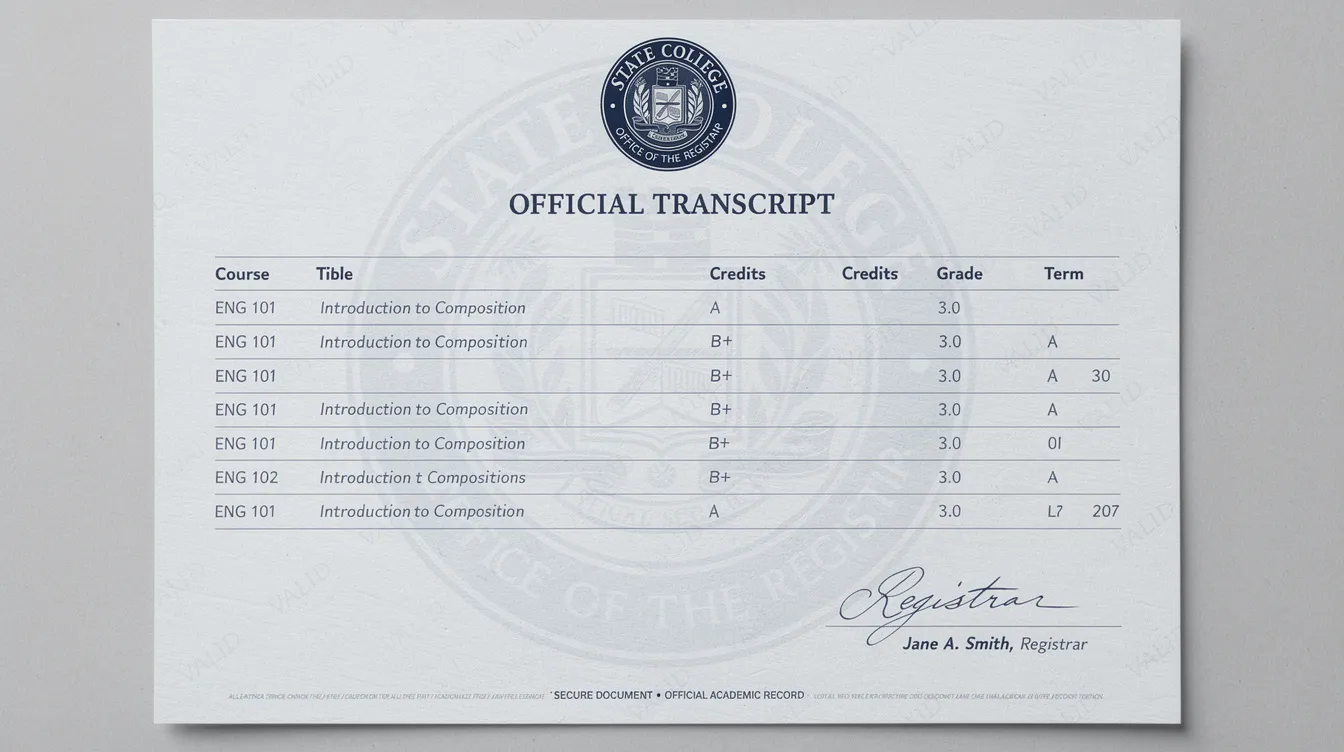
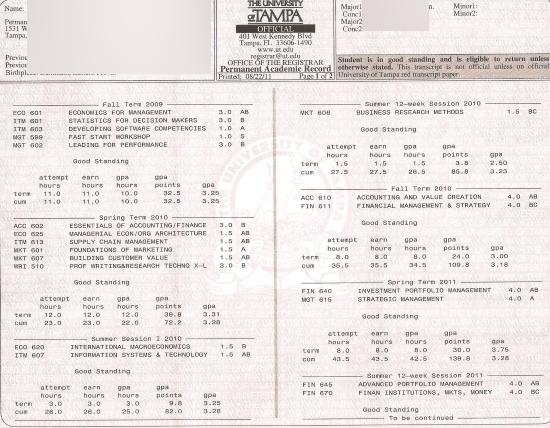
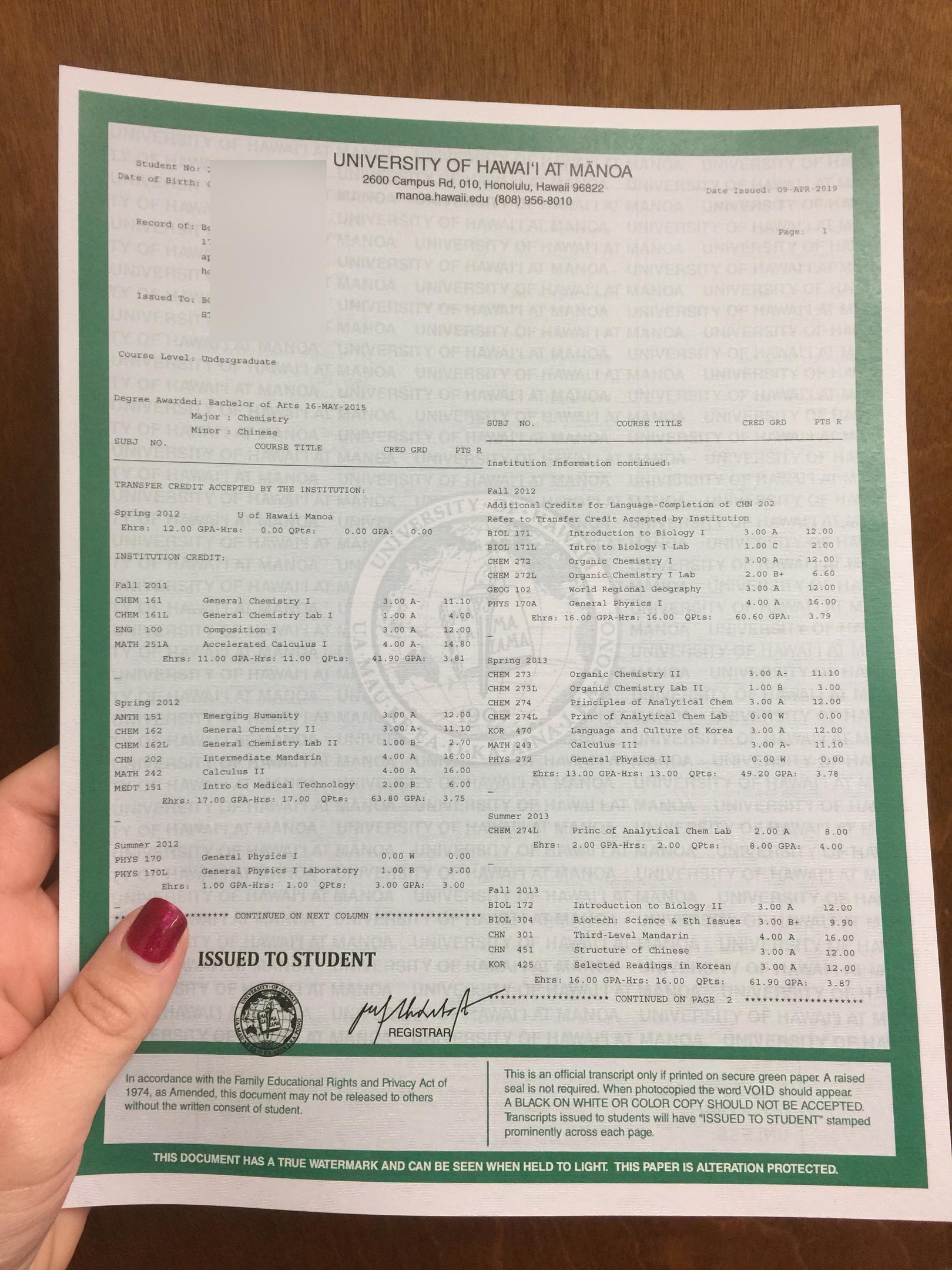
Official transcripts are authenticated documents featuring the college seal, registrar’s signature, and security features such as watermarks and tamper-proof paper.
An official transcript is a certified copy of your academic record that has been authenticated by your educational institution. A crucial element in verifying the official status of a transcript is the presence of the school's seal, which ensures the document's integrity and authenticity. This authentication typically includes security features designed to prevent tampering or forgery.
Key Characteristics of Official Transcripts
Security Features: Official transcripts incorporate multiple security elements including watermarks, embossed seals, special paper, and the registrar’s signature. They are often printed in landscape format, which further distinguishes their appearance and enhances security. These features verify the document’s authenticity and ensure it hasn’t been altered after issuance.
Sealed Delivery: When sent in physical form, official transcripts arrive in sealed envelopes. If the seal is broken before reaching the recipient, the transcript is no longer considered official. This protective measure maintains the document’s integrity throughout the delivery process.
Direct Transmission: Official transcripts must be sent directly from the issuing institution to the requesting party. Students cannot personally deliver official transcripts, even in sealed envelopes, as this could compromise their authenticity.
Electronic Security: Modern electronic official transcripts use encrypted delivery systems and digital signatures. These official transcript services provide the same level of authentication as traditional paper versions while offering faster delivery times.
When Official Transcripts Are Required
Official transcripts are mandatory in situations where credential verification is critical:
College and University Admissions: Nearly all higher education institutions require official transcripts from previously attended schools as part of the application process.
Graduate and Professional School Applications: Law schools, medical schools, and other graduate programs universally require official transcripts to verify undergraduate performance.
Employment Verification: Many employers, particularly in education, healthcare, and government sectors, request official transcripts to confirm educational qualifications.
Professional Licensing: State licensing boards for professions such as teaching, nursing, and engineering typically require official transcripts to verify educational requirements.
Transfer Credit Evaluation: When transferring between institutions, official transcripts are necessary for the receiving school to evaluate and accept previous coursework.
What Is an Unofficial Transcript?
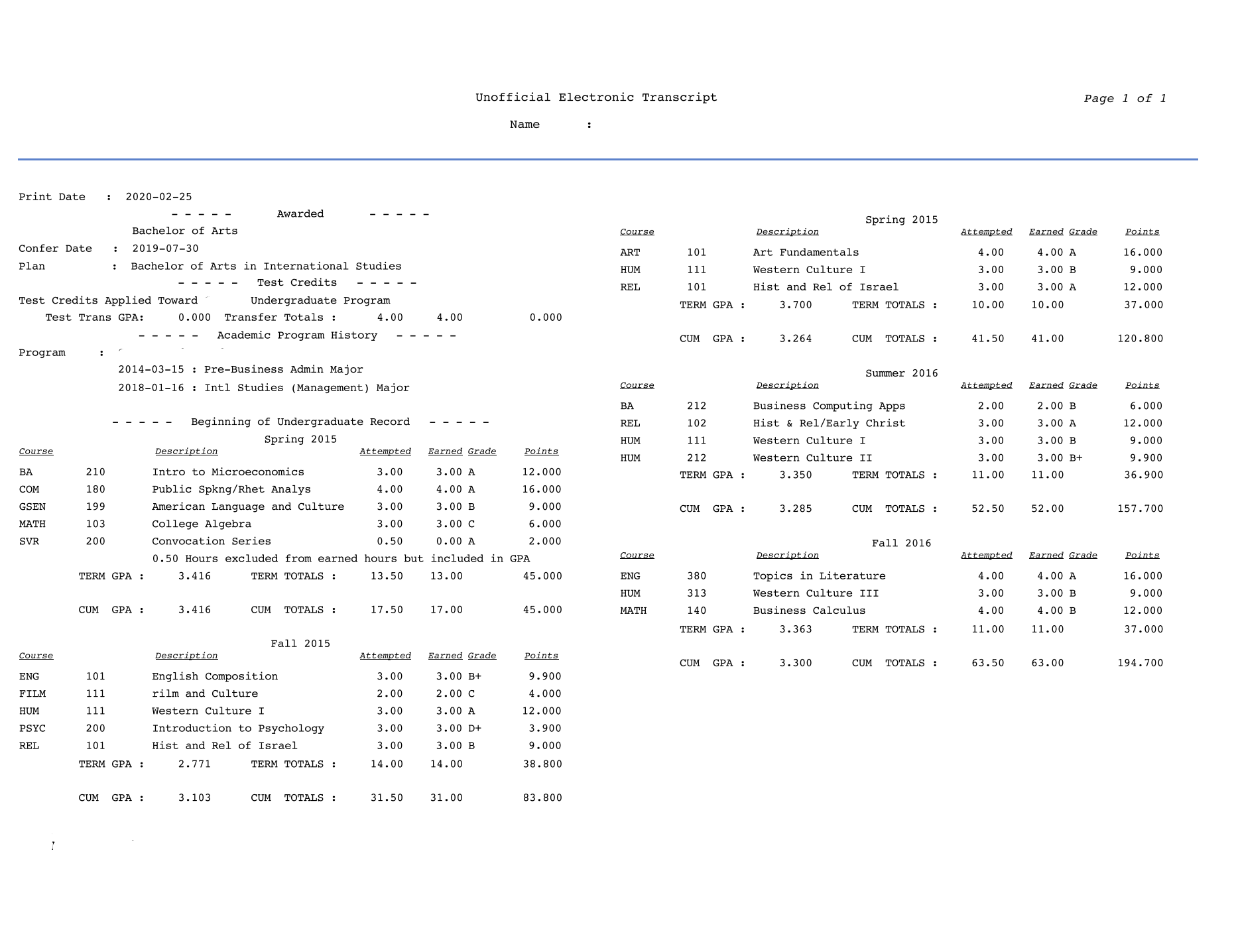
Unofficial transcripts provide the same academic information but lack formal authentication marks, making them suitable for personal reference and informal use.
An unofficial transcript contains the same academic information as an official transcript but lacks the authentication features and formal delivery methods that establish credibility with institutions and employers. Unofficial transcripts are typically provided in portrait format, which distinguishes their appearance from official versions.
Key Characteristics of Unofficial Transcripts
Student Access: Unofficial transcripts are typically available to students through online portals, allowing immediate access to their academic records. Current students can use self service platforms, such as a Student Center or similar online portal, to view unofficial transcripts and check their enrollment and degree information. To view unofficial transcript, students usually log in to their student portal, navigate to the academic records section, and select the option to view or download the document for personal review. Students can view, download, and print these documents at any time.
No Security Features: Unlike their official counterparts, unofficial transcripts don’t include watermarks, seals, or special paper. They’re essentially informational copies of your academic record.
Personal Distribution: Students can freely share unofficial transcripts with anyone. There are no restrictions on how these documents are delivered or who handles them before reaching the recipient.
No Cost or Low Cost: Most institutions provide unofficial transcripts free of charge or for a minimal fee, making them accessible for personal record-keeping and informal verification purposes.
When Unofficial Transcripts Are Appropriate
Unofficial transcripts serve important purposes in less formal situations:
Personal Records: Keeping copies of your academic history for your own reference and planning purposes.
Academic Advising: Sharing with advisors during course planning sessions or degree audit reviews.
Preliminary Applications: Some institutions accept unofficial transcripts for initial application review, requesting official versions only upon admission.
Scholarship Applications: Certain scholarship programs may accept unofficial transcripts for preliminary screening, though official versions are typically required for finalists.
Employer Screening: Initial job applications may only require unofficial transcripts, with official versions requested later in the hiring process.
Graduate School Inquiries: When exploring graduate programs or seeking preliminary admission feedback, unofficial transcripts often suffice for initial consultations.
Other Situations: Unofficial transcripts may also be accepted in other situations, such as for internships, informal reviews, or when a quick reference is needed.
Side-by-Side Comparison: Official vs. Unofficial Transcripts
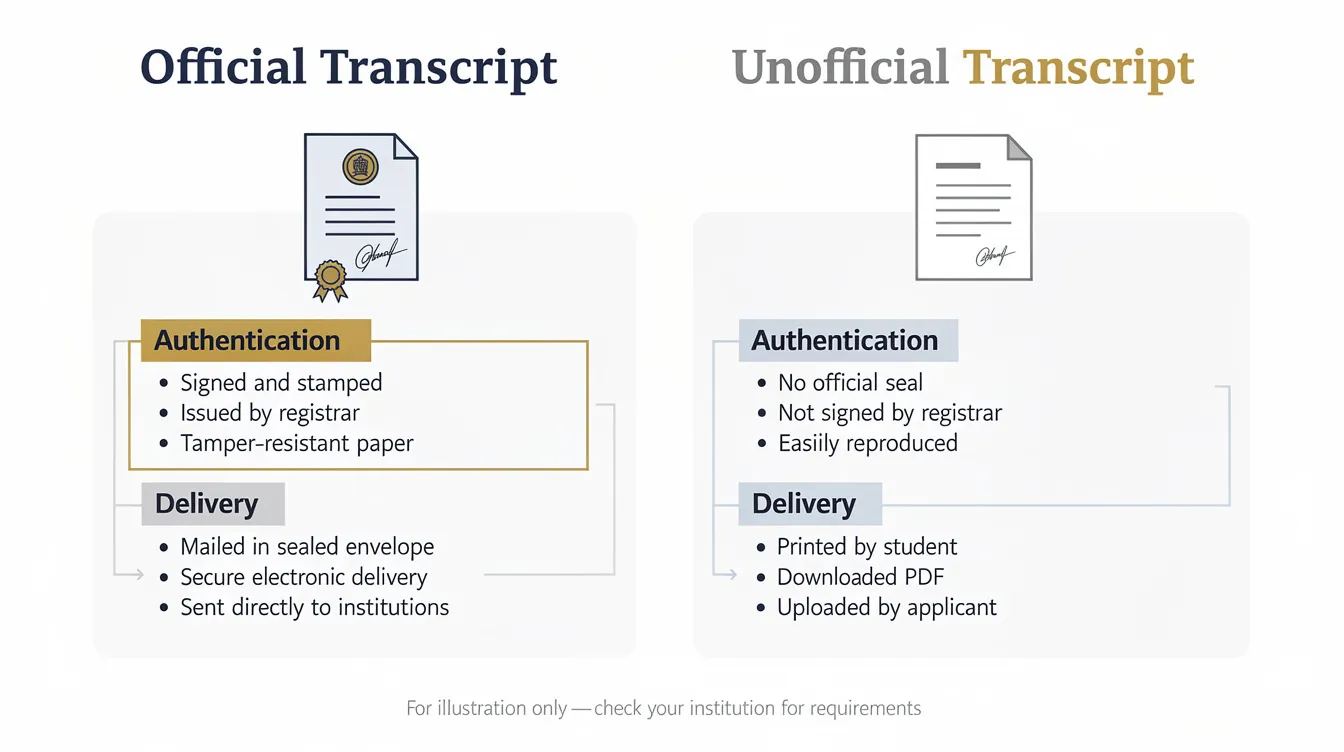
This infographic highlights the main differences between official and unofficial transcripts, including authentication, delivery, and usage.
| Feature | Official Transcript | Unofficial Transcript |
| Authentication | Watermarks, seals, signatures | None |
| Delivery Method | Sealed envelope or encrypted electronic delivery | Open access, printable |
| Distribution | Directly from institution to recipient | Student can distribute freely |
| Cost | Typically $5-$20 per copy | Usually free or minimal cost |
| Acceptance | Required for formal applications | Accepted for informal purposes only |
| Processing Time | 3-10 business days | Immediate access |
| Modification | Tamper-evident features | Easily printable/modifiable |
-
Note: Unofficial transcripts are suitable for personal reference or informal use, but are not accepted for formal applications or official verification.
The Cost Factor: Budgeting for Transcript Requests
Understanding the cost of obtaining transcripts helps you plan accordingly, especially when applying to multiple institutions.
Official transcript fees vary by institution but typically range from $5 to $20 per copy. Rush processing may incur additional charges of $10 to $30. If you're applying to numerous graduate programs or jobs, these costs can accumulate quickly. Many schools offer bulk discounts when ordering multiple copies simultaneously.
Unofficial transcripts, conversely, are almost always free through student portals. This makes them ideal for your personal records and situations where official authentication isn't required, while some people also choose unofficial personal copies of diplomas and transcripts for display or backup purposes.
How to Request Each Type of Transcript
Requesting Official Transcripts
Most institutions offer online portals where students can easily request official or unofficial transcripts with just a few clicks.
The process for obtaining official transcripts generally follows these steps:
-
Access Your Institution’s Website: Visit your school’s registrar’s office website or student portal to order an official transcript.
-
Verify Your Identity: You’ll need to provide identifying information such as student ID, date of birth, and dates of attendance.
-
Specify Recipients: Provide complete mailing addresses or electronic delivery information for each recipient.
-
Choose Delivery Method: Select between standard mail, expedited shipping, or electronic delivery.
-
Pay Applicable Fees: Submit payment for each transcript copy and any rush processing charges.
-
Confirm Your Request: Save your confirmation number and expected delivery timeframe.
If you encounter issues such as transcript holds, delays, or need to verify your identity, contact your registrar's office for assistance—they are responsible for managing academic records and resolving related concerns.
For students who need quick access to official transcripts, expedited services can significantly reduce waiting periods.
Requesting Unofficial Transcripts
Obtaining unofficial transcripts is typically simpler:
1. Log Into Your Student Portal: Access your institution's online student services system.
2. Navigate to Academic Records: Find the transcripts or academic history section.
3. View or Download: You can usually view your transcript on-screen or download a PDF version.
4. Print if Needed: Save or print copies for your records.
Most institutions allow unlimited access to unofficial transcripts through student portals, even for alumni.
Best Practices for Managing Your Transcripts
Keeping organized records of both official and unofficial transcripts helps streamline applications and maintain accurate academic history.
Effectively managing your official and unofficial transcripts is essential for maintaining accurate academic records and ensuring a smooth process when applying for jobs, further education, or professional licenses. Understanding the key differences between official and unofficial transcripts helps you determine which document to use in specific situations and prevents unnecessary delays or complications.
Official transcripts are the gold standard for formal applications, such as college admissions, job applications, and professional licensing. These documents are certified by your educational institution, featuring the registrar’s signature and the official seal, and are delivered directly to the recipient in a sealed envelope or through secure electronic channels. Because they are considered official only when sent directly from the issuing institution, it’s important to double-check the requirements of the college, employer, or licensing board before submitting your request. Many schools and employers require official transcripts to verify your academic achievements and credentials, especially for positions or programs that demand a high level of academic integrity.
In contrast, unofficial transcripts are ideal for personal use, academic advising, and preliminary applications. You can easily view your unofficial transcript through your student portal or online portals, download it, and print copies on plain paper for your records. While unofficial transcripts contain the same academic history, including courses, grades, and degree information, they lack the official seal and registrar’s signature, making them suitable only for informal purposes or as a personal reference. Unofficial transcripts are often accepted for initial application reviews, academic advising sessions, or when you need to quickly share your academic progress with advisors or potential employers.
To manage both types of transcripts effectively, keep organized personal records of your academic achievements, including copies of your unofficial transcripts. Some individuals also order custom replica or replacement diplomas and transcripts for personal display or commemorative use. When preparing for formal applications, request official transcripts well in advance to account for processing and delivery times. Always verify whether the recipient requires an official or unofficial transcript, as submitting the wrong type can result in delays or rejection of your application. Remember, once an official transcript is opened or tampered with, it is no longer considered official, and you will need to request a new certified copy from your institution.
Storing your transcripts securely is also important. Official transcripts should remain sealed until delivered directly to the intended recipient, while unofficial versions can be stored digitally or in print for easy access. By understanding the content differences and delivery requirements for official and unofficial transcripts, you can confidently submit the correct documents for each situation—whether for formal applications, academic advising, or personal reference.
Ultimately, managing your transcripts with care ensures your academic records are accurate, up-to-date, and ready whenever you need them, helping you navigate everything from job applications to further education with confidence. For non-official purposes like décor, keepsakes, or props, some people opt for realistic replica diplomas and transcript makers that provide novelty documents only.
Common Misconceptions About Transcripts
Misconception: Unofficial transcripts are less accurate than official ones.
Reality: Both types contain identical academic information. The difference is in authentication, not accuracy.
Misconception: You can make an unofficial transcript "official" by sealing it in an envelope.
Reality: Official transcripts must come directly from the institution with proper security features. Student-sealed envelopes are not accepted as official.
Misconception: All employers and schools require official transcripts.
Reality: Requirements vary. Some accept unofficial transcripts for initial screening, while others require official versions from the start. Always verify specific requirements.
Misconception: Electronic transcripts are less secure than paper versions.
Reality: Electronic official transcripts often include more sophisticated security measures, including encryption and digital signatures that are more difficult to forge than paper documents.
Special Situations and Considerations
Transcript Holds
Many institutions place holds on transcript requests when students have outstanding obligations such as unpaid tuition, library fines, or unreturned equipment. These holds prevent both official and unofficial transcript access until resolved. If you're experiencing delays, contact your institution's bursar or registrar's office to identify and resolve any holds.
Transcripts from Closed Institutions
When schools close or merge with other institutions, transcript access can become complicated. State education departments typically maintain records or designate custodial institutions to handle transcript requests. The National Student Clearinghouse often maintains records for closed institutions.
International Transcript Evaluation
Students who attended institutions outside the United States may need their transcripts evaluated by credential evaluation services. These services translate foreign transcripts and convert grades to U.S. equivalents. Both official and unofficial versions may require this additional step depending on the receiving institution's requirements.
Replacement Documentation
In situations where obtaining transcripts from your original institution is difficult or impossible, alternative documentation options exist. Understanding your transcript replacement options can help you navigate challenging credential verification situations.
Best Practices for Managing Your Transcripts
Keep Personal Copies: Maintain unofficial transcript copies for your records. These help you track your academic progress and prepare applications without incurring costs for each reference.
Order in Advance: Official transcripts can take up to two weeks to process and deliver. Submit requests well before application deadlines to avoid delays.
Verify Recipient Requirements: Always confirm whether official or unofficial transcripts are needed before ordering. Some organizations accept unofficial versions for preliminary review, saving you money.
Check for Errors: Review an unofficial transcript before ordering official copies. If you notice discrepancies, contact your registrar's office to request corrections before sending documents to important recipients.
Track Your Requests: Keep confirmation numbers and delivery tracking information for all official transcript orders. Follow up if documents don't arrive within the expected timeframe.
Understand Holds: Address any financial or administrative holds promptly to ensure uninterrupted access to your academic records.
Frequently Asked Questions
Can I scan my official transcript and email it?
No. Once you open a sealed official transcript or scan it, it becomes an unofficial copy. Official transcripts must be delivered directly from the institution to maintain their official status.
How long does it take to receive an official transcript?
Processing typically takes 3-10 business days, plus mailing time. Electronic delivery is usually faster, often within 24-48 hours. Expedited services can reduce this timeframe further.
Are unofficial transcripts acceptable for job applications?
It depends on the employer. Some accept unofficial transcripts initially, requesting official versions only for final candidates. Always check the specific application requirements.
Can I get transcripts from a school I attended years ago?
Yes. Schools maintain permanent academic records. Alumni can request transcripts regardless of graduation date, though fees and processing methods may differ.
What if my transcript has an error?
Contact your institution's registrar's office immediately. They'll investigate and correct legitimate errors. This process can take several weeks, so address issues as soon as you notice them.
Do I need official transcripts for every school I've attended?
Most graduate programs and employers require official transcripts from all post-secondary institutions attended, even if you only took one course or didn't complete a degree.
How do you usually get your unofficial transcript?
You can usually view your unofficial transcript on-screen or download a PDF version.
How are unofficial transcripts used by the school directly?
Unofficial transcripts are used by advisors during meetings to review academic progress. Unofficial transcripts are also often used when planning course transfers before applying officially.
Do I get an official transcript from the school directly?
Opening a physical official transcript or downloading a secure electronic one yourself renders it unofficial in the eyes of most institutions.
Which transcript version does the student get?
Only official transcripts are accepted for formal applications, while unofficial transcripts are suitable for personal reference.
Are transcripts used for situations other than jobs?
Immigration or visa applications often require official transcripts as part of the documentation process.
Conclusion
Understanding the difference between official and unofficial transcripts empowers you to navigate educational and professional applications efficiently. While both document types contain identical academic information, their authentication methods and acceptable use cases differ significantly.
Official transcripts, with their security features and direct delivery requirements, serve as the gold standard for credential verification in formal settings. Unofficial transcripts provide convenient, cost-free access to your academic records for personal use and informal situations.
By knowing when each type is appropriate, planning ahead for transcript requests, and maintaining organized records, you can streamline your application processes and avoid common pitfalls. Whether you're pursuing advanced education, seeking employment, or simply maintaining your academic documentation, this knowledge ensures you're prepared with the right credentials at the right time.

Need a high-quality replica transcript or diploma quickly?
At Same Day Diplomas, we specialize in custom replica documents crafted with precision and delivered fast. Whether you want a stunning display piece, a keepsake, or a prop, our same-day production and worldwide shipping have you covered.
Get started now**, browse our templates, customize your replica, and order with confidence today!


